
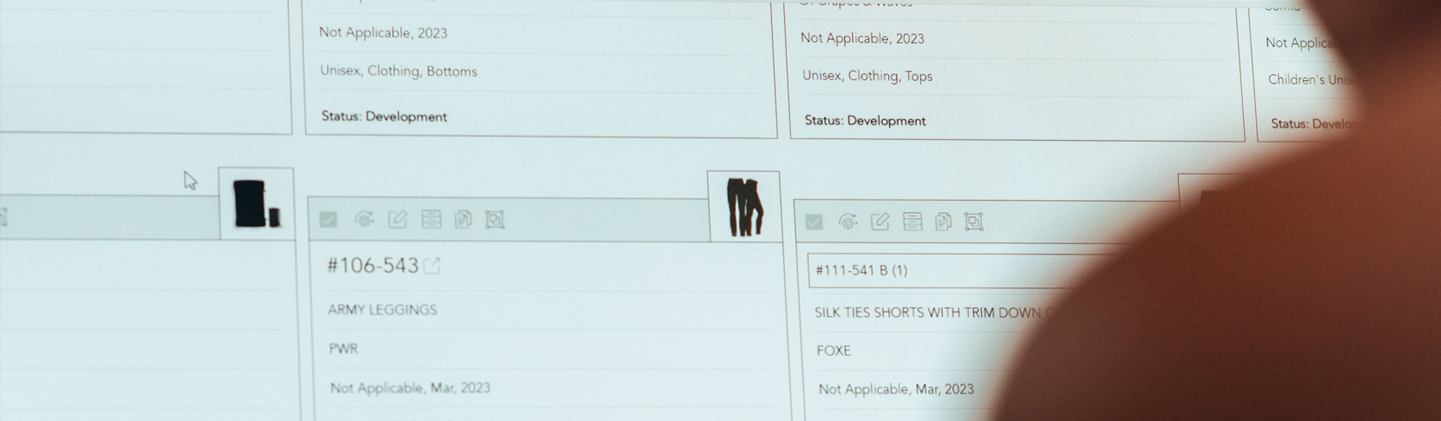
A detailed tech pack can feel like the finish line.
The garment has been drawn. Measurements have been specified. Fabrics have been identified. Stitching, trims, pockets, labels and packaging may all have been documented.
Surely the next step is simply to send it to a factory and ask them to make it?
Not always.
In many cases, this is actually the point where commercial product development begins.
I recently reviewed a premium technical workwear trouser that illustrates this perfectly.
The product arrived with an incredibly detailed 17-page technical pack covering multiple performance fabrics, reinforcement zones, stretch panels, ventilation, detachable utility pockets, knee-pad compartments, specialist hardware, numerous zippers and extensive heavy-duty construction.
Technically, it was extremely well considered.
Commercially, the first costing told a very different story.
The founder had already been quoted around £180 per garment elsewhere, gone back to the drawing board and simplified the original design.
Even after those changes, the product still carried too much cost to comfortably support the intended retail price at an initial production quantity of around 150 units to test the market. Even at scale it still wasn't viable.
And that is exactly where proper product development becomes important.
Technical Development and Commercial Development Are Not the Same Thing
A tech pack describes what you want a factory to manufacture.
It does not automatically tell you whether manufacturing it makes commercial sense.
A garment can be technically possible and still be commercially unrealistic.
This becomes particularly important for start-ups and smaller brands launching at relatively low production quantities.
At 5,000 pieces, a factory may be able to optimise operations, purchase materials more efficiently and spread certain costs across significant volume.
At 150 pieces, the economics are very different.
Every additional component, sewing operation and supplier minimum becomes more significant.
That is why one of the first things we look at is not simply whether a garment can be made.
We look at whether it can be made commercially.
Why We Prefer to Develop the Tech Pack Ourselves
This is also one of the reasons Fazane Fox Production Agency generally prefers to be involved in creating the tech pack rather than receiving a completely finished specification at the end of somebody else’s design process.
For us, a tech pack is not simply a document describing the most elaborate version of a product.
It should represent a product that has been considered against commercial reality from the beginning.
While developing a garment, we are already thinking about:
- What is the target retail price?
- What production price does the business model need to achieve?
- What is the intended first production quantity?
- Which manufacturing country is realistic?
- What fabrics are commercially available at that volume?
- What supplier MOQs will apply?
- How many sewing operations are being introduced?
- Is a particular component adding enough customer value to justify its cost?
- Can the product scale commercially if the first launch succeeds?
That means design, technical development, sourcing and costing should not be treated as completely separate exercises.
They inform each other.
A beautifully designed product can include every conceivable feature, but if it has been developed without considering material prices, factory capability, sewing time, supplier minimums and the intended retail model, the finished tech pack may describe a product that simply does not work as a business.
At that point, the brand has effectively paid to develop the product once and may then need to pay again to commercially engineer it.
Our preference is to put those commercial considerations front and centre from the beginning.
That does not mean stripping creativity or innovation out of a product.
It means making informed design decisions so that the finished tech pack represents something the brand has a realistic chance of successfully manufacturing and selling.
Where Does the Cost Actually Come From?
Founders often assume the fabric will be the largest factor affecting production cost.
Sometimes it is.
But complex garments can accumulate cost in dozens of less obvious places.
A technical workwear trouser, for example, might include:
- Multiple fabric qualities
- Reinforcement materials
- Stretch panels
- Mesh ventilation
- Numerous pocket components
- Detachable utility pockets
- Webbing systems
- Multiple zipper types
- Knee-pad compartments
- Metal hardware
- Reflective trims
- Specialist seams
- Double or triple topstitching
- Extensive bartacking
Every one of these elements introduces material cost, but it can also introduce additional cutting, handling and sewing operations.
A seemingly simple additional pocket may require several pattern pieces, reinforcement, a zipper, additional topstitching and multiple bartacks.
Multiply this across an entire garment and sewing time can increase very quickly.
This is why costing needs to be considered at product architecture level, not simply by looking at fabric price.
Low Production Quantities Create Another Challenge
Materials and manufacturing are only part of the picture.
Branding and packaging suppliers also operate their own minimum order quantities.
A brand producing 150 garments may discover that its chosen supplier requires 500, 1,000 or even 3,000 pieces of a particular item.
This can apply to:
- Woven labels
- Care labels
- Size labels
- Swing tickets
- Branded polybags
- Printed packaging
- Custom trims
The brand then has a decision to make.
It can purchase the supplier MOQ and retain the excess for future production, or it can reconsider the first-run branding strategy.
For an early-stage brand, a stock bag with branded labelling or stickers may make considerably more commercial sense than investing heavily in fully bespoke packaging before the product has proven itself in the market.
That is not lowering the standard of the brand.
It is making an intelligent decision about where to invest during the first production run.
This Is Where Cost Engineering Comes In
Cost engineering does not mean stripping every interesting feature from a product until it becomes generic.
Done properly, it is almost the opposite.
It means understanding which features define the product and protecting them.
Everything else can then be questioned.
Could a different construction method achieve the same result with fewer operations?
Could one fabric perform the job currently allocated to two?
Does a particular zipper genuinely improve the user experience?
Could a reinforcement panel be reshaped to reduce fabric consumption?
Could a stock-supported performance fabric replace a custom-developed one?
Does every pocket need to be constructed in the same way?
Could commercially available hardware replace bespoke components?
The objective is to retain the reason the customer wants the product while removing unnecessary cost.
The Development Meeting Is Not Just About Design
This is why our development meetings often go far beyond aesthetics.
We may spend several hours reviewing a single product against:
- Target retail price
- Target production price
- Production volume
- Customer requirements
- Fabric performance
- Construction complexity
- Manufacturing capability
- Supplier MOQs
- Branding
- Packaging
- Future scalability
Sometimes the original design changes very little.
Sometimes it changes significantly.
The important thing is that those decisions are made before significant money is committed to sampling and production.
Sampling Should Answer Questions
A prototype should not simply prove that a factory can reproduce a drawing.
It should help answer questions.
Does the garment fit correctly?
Does it move correctly?
Do the fabrics work together?
Are the pockets positioned correctly?
Does the construction perform as expected?
Can any operations be simplified?
Has the revised specification improved the costing?
A good development process uses each sample to move the product closer to both technical and commercial readiness.
A Tech Pack Is a Starting Point
None of this makes a detailed tech pack less valuable.
Quite the opposite.
A strong technical pack gives everyone something tangible to review.
But founders should be careful about treating it as an instruction that can never change.
The best products usually evolve during development.
Fabric availability changes.
Factories suggest better construction methods.
Fit issues appear during sampling.
Components behave differently in physical form than expected.
Commercial costing exposes features that are disproportionately expensive.
Good development allows those lessons to improve the product.
The Goal Is Not to Manufacture the Drawing
Ultimately, the goal of product development should not be to manufacture a drawing at any cost.
The goal is to create the best commercially viable version of the product.
That means balancing design, function, quality, manufacturing and price.
And sometimes the most valuable thing an experienced development partner can tell you is not:
“Yes, we can manufacture this.”
It is:
“Yes, we can manufacture this. But before we do, we should make it better.”
Much Love as always and thankyou for attending my ted talk!
Fazane Fox
xxx





Shelley / Childrenswear Brand
Let’s Bring Your Product To Life
Whether you’re a startup founder, innovative brand or established business, we help bring purposeful products to life through design, development and production.


