
If You Don’t Understand the Cost, You Don’t Have a Quote
There is a moment in product development that every founder eventually meets.
The moment a supplier gives you a price.
Sometimes it feels exciting. Sometimes it feels terrifying. Sometimes it feels like someone has thrown a random number into the room and shut the door.
“This will cost £25 per unit landed!"
Okay.
But why?
That is the question that matters.
Because £25 on its own does not tell you very much. It does not tell you whether the product is expensive because of the material, the labour, the packaging, the trims, the construction, the moulds, the freight, the duty, the quantity, or the country of manufacture.
It does not tell you whether the product has been over-engineered.
It does not tell you whether the packaging is too ambitious for the price point.
It does not tell you whether one component is killing the margin.
It does not tell you whether a small construction change could make the product commercially viable.
It is just a number.
And a number without context is not a quote. It is a problem waiting to happen.
Why Open Costing Matters
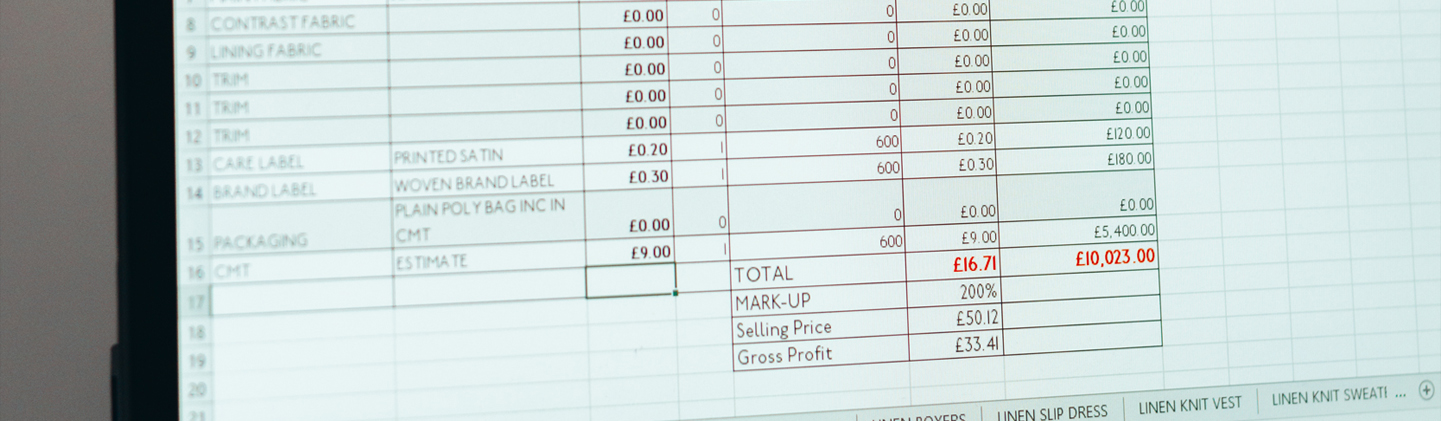
At Fazane Fox Production Agency, we work with open costings wherever possible.
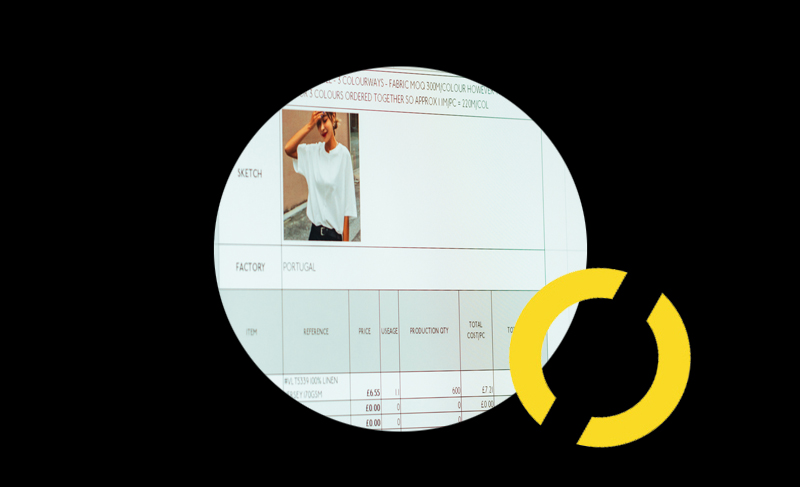
That means we break costs down into clear sections so the client can see what they are actually paying for.
Fabric.
Trims.
Components.
Packaging.
Labels.
CMT.
Freight.
Duty.
Testing.
Development.
Sampling.
Production.
QC.
Whatever is relevant to the product, we want to understand it properly.
Not because we want to overwhelm clients with spreadsheets, but because clarity gives people choices.
If a product is too expensive, a proper breakdown allows us to ask the right questions.
Can we change the fabric?
Can we simplify the construction?
Can we source a different trim?
Can we reduce the packaging?
Can we move production country?
Can we increase the order quantity?
Can we split the product into phases?
Can we remove a feature without damaging the function?
Can we adjust the retail price?
Can we improve the margin?
Without a breakdown, none of those questions can be answered properly.
You cannot value-engineer a mystery number.
Transparency Can Improve Margin
We recently worked with a technical apparel client who had previously received production costs without clear open costings.
They had a final number, but they didn’t really know where that number was coming from.
That meant they couldn’t properly see what was driving the price.
Was it the fabric?
The trims?
The construction?
The packaging?
The country of manufacture?
The order quantity?
The labour?
The route into production?
Without that information, they had no real way to make informed decisions.
So we broke it down.
We looked at the full product cost properly. We separated the fabric, trims, components, labour, packaging and production route. We identified where the commercial pressure points were sitting and where savings could realistically be made without damaging the quality or purpose of the product.
From there, we could advise properly.
Not by cutting corners.
Not by simply asking a factory to “make it cheaper”.
But by understanding the product commercially and technically, then making informed changes.
That transparency helped the client understand their numbers properly, identify cost-saving opportunities and improve their profit margins.
That is the value of open costing.
It does not just explain the price.
It gives you options.
A Quote Should Help You Make Decisions
A good quote is not just a price.
It should help you understand the commercial reality of your product.
Can it be made?
Can it be made well?
Can it be made safely?
Can it be made at the right price?
Can it scale?
Is the target retail price realistic?
Is the chosen production route suitable?
Is the design too complex for the current stage?
Are the margins healthy enough to support the business?
These questions matter, especially for start-ups and founder-led brands.
It is very easy to fall in love with a product idea. It is much harder to look at the numbers and ask whether the product can survive in the real world.
That is where proper product development comes in.
Not just sampling.
Not just sourcing.
Not just asking factories for a price.
Real product development means joining the technical and commercial dots.
The Danger of the Big Number
One of the biggest frustrations in production is receiving one big lump-sum price with no explanation behind it.
The supplier may have good reasons for that price. They may have allowed for risk, labour, material, admin, development, packing, shipping, or contingency.
But if they do not show the breakdown, the client cannot understand it.
And if the client cannot understand it, they cannot make informed decisions.
That creates confusion, frustration and often mistrust.
It also makes it almost impossible to improve the product commercially.
If the cost is too high, where do you start?
You could reduce the quality, but that might damage the product.
You could change supplier, but the issue might be the construction.
You could change country, but the issue might be the packaging.
You could cut features, but the issue might be the labour.
You could increase the RRP, but the market might not accept it.
Without clarity, everyone is guessing.
And guessing is not a strategy.
Commercial Viability Is Part of Development
A product can be beautifully designed and completely unviable.
That sounds harsh, but it is one of the most important lessons in product development.
If a product costs too much to make, cannot hit the target retail price, has no margin, or requires a production route that does not suit the brand’s current stage, then it needs more work before production.
That does not mean the idea is bad.
It means the product needs to be engineered properly.
Sometimes that means changing the material.
Sometimes it means simplifying the design.
Sometimes it means reducing packaging.
Sometimes it means using one production route for development and another for scale.
Sometimes it means raising the retail price.
Sometimes it means testing the market before committing to bulk production.
The earlier those conversations happen, the better.
Because the most expensive time to discover your product does not work commercially is after you have made it.
Why Clients Come to FFPA
Clients come to Fazane Fox Production Agency because we make the process clear.
We do not just ask for prices and pass them on.
We interrogate them.
We break them down.
We look for the cost drivers.
We challenge what does not make sense.
We explain the commercial reality.
We help clients understand their options.
Our job is not to tell people what they want to hear.
Our job is to help them build products that can actually work.
That means being honest when a target price is unrealistic.
It means showing where costs are sitting.
It means explaining why one route may work for sampling but not production.
It means helping founders avoid expensive mistakes.
It means protecting both the product and the business behind it.
Because product development is not just about making something.
It is about making something properly.
Something that functions.
Something that can be produced.
Something that can be sold.
Something that has margin.
Something that has a realistic route to market.
A quote should not be a fog machine.
It should be a map.
And if you do not understand the cost, you do not have a quote.
You have a number.



Shelley / Childrenswear Brand
Let’s Bring Your Product To Life
Whether you’re a startup founder, innovative brand or established business, we help bring purposeful products to life through design, development and production.


